October 17, 2026
Does Landscaping Improve Home Value? What Homeowners Should Consider
Does landscaping improve home value? Learn how smart outdoor investments boost curb appeal and resale value for homes across Central and Northern Wisc...
Every successful outdoor project in Wisconsin starts the same way: on paper, long before the first shovel hits the ground. A thoughtful plan is the difference between a yard that functions beautifully for decades and one that needs costly rework after a single season. That is why so many homeowners searching for lawn care services in the Marshfield area are surprised to learn how much strategy goes into a great landscape before any planting begins.
So what is a landscaping site plan, exactly? In simple terms, it is a scaled, detailed drawing of your property that maps out existing features and proposed improvements. It shows where your home sits, where trees and utilities are located, how water drains, and where new elements like patios, gardens, walkways, and lawns will go. Think of it as the blueprint that guides every decision from design to installation.
In this guide, we will break down what goes into one of these plans, why it matters for your budget and your results, and how it helps protect your investment through our harsh Central and Northern Wisconsin seasons.
A landscaping site plan is a bird's-eye drawing of your property, usually drawn to scale, that documents both what currently exists and what you intend to build. Rather than guessing where a flower bed should go or how large a patio needs to be, the plan puts everything in proportion so you can see how the pieces fit together before committing time and money.
A complete plan typically captures several key details. These include the boundaries of your lot, the footprint of your home and any outbuildings, existing trees and shrubs worth keeping, slopes and drainage patterns, underground utilities, and the proposed locations of new features. When those details are gathered in one document, you gain a clear picture of what is possible and where potential conflicts might arise.
For properties across Wisconsin, this kind of planning also accounts for our specific climate challenges. Freeze-thaw cycles, heavy snow loads, and seasonal moisture all influence where hardscapes should sit and which plants will thrive. A good plan factors those realities in from the start rather than treating them as afterthoughts.
Understanding what is a landscaping site plan is only half the story. The bigger question is why it makes such a difference in the finished result. The honest answer is that it saves you from expensive surprises and helps your money go further.
Without a plan, it is easy to install a walkway that funnels water toward your foundation, plant a tree too close to a power line, or build a patio that ends up too small for the furniture you had in mind. Each of those mistakes costs real money to correct. A site plan catches these issues on paper, where changes are free, instead of in the ground, where they are not.
A plan also keeps a multi-phase project on track. Many homeowners cannot tackle everything at once, and that is perfectly reasonable. With a master plan in hand, you can install the patio this year, the garden beds next spring, and a fence the following season while knowing each phase connects seamlessly to the next. If fencing is part of your long-term vision, coordinating it early through our fence installation services in Marshfield avoids awkward overlaps and wasted materials down the road.
Creating a useful plan is a process, not a single sketch. It begins with gathering information about your property and ends with a document you can actually build from. Here is how the pieces generally come together:
Throughout this process, measurements matter. A plan drawn to scale ensures that a 20-foot patio is actually 20 feet, and that the spacing between plants gives them room to mature. Guesswork at this stage leads to crowding, poor sightlines, and plants that outgrow their space within a few years.
One of the most overlooked benefits of planning is how it shapes the health of your lawn and plantings. Grass, perennials, and trees all have different needs for light, water, and soil. A site plan maps sun and shade patterns so the right plant ends up in the right place, which reduces replacement costs and ongoing maintenance.
Drainage planning is especially important here. Standing water drowns turf and invites disease, while poorly graded areas can erode mulch and topsoil after every storm. By designing grades and drainage into the plan, you set your lawn up to stay healthy and green with far less effort. That foundation makes routine lawn care maintenance in Marshfield more effective because you are working with the landscape rather than fighting against it.
The plan also clarifies which areas need regular attention and which are low-maintenance by design. If you want less time spent mowing and more time enjoying your yard, that preference can be built directly into the layout with strategic bed placement, native plantings, and defined edges.
Homeowners sometimes assume that a plan is only necessary for large, elaborate yards. In reality, even modest projects benefit from a little forethought. If you are adding a single garden bed, a plan might be a simple sketch. If you are reimagining the entire property, it becomes a detailed document. The scale of the plan should match the scale of the ambition.
What stays consistent is the value of thinking ahead. A small investment in planning almost always pays for itself by reducing mistakes, improving results, and making future additions easier. When you understand what is a landscaping site plan and how it protects your budget, the question shifts from whether you need one to how detailed yours should be. You can browse our project gallery to see how thoughtful planning translates into finished spaces across a range of property sizes.
So, to answer the central question one final time, what is a landscaping site plan? It is your roadmap to a yard that works, looks great, and holds up to Wisconsin weather, created before a single plant goes in the ground. It turns vague ideas into a clear, buildable vision and keeps your investment protected from costly missteps.
Whether you are planning a full outdoor transformation or a focused upgrade, starting with a solid plan is the smartest move you can make. Our team handles landscaping in Marshfield, WI and the surrounding areas, and we would be glad to help you map out a space that fits your life and your property. Reach out to us for a consultation, and let's put your ideas on paper so we can bring them to life the right way.
October 17, 2026
October 15, 2026
Permit requirements for tree removal vary based on your location and the size of the tree. We can help determine if a permit is necessary and guide you through the process to ensure compliance with local regulations.
If your lawn has bare patches, thinning grass, or persistent weeds, it may be time for new lawn installation or repair. Our team will assess your soil and recommend the best grass type for your property.
The duration depends on the method used. Sod installation provides an instant green lawn and is typically ready for use in a few weeks, while seeding takes longer but is a cost-effective option.
Typically, we recommend weekly or biweekly services for mowing, pruning and trimming, and general upkeep. Seasonal maintenance, such as aeration, fertilizing, and leaf cleanup, is also essential to keep your yard looking its best year-round.
The best time to plant trees and shrubs is usually in early spring or fall when temperatures are mild, and roots have time to establish before extreme weather conditions. We can help you select and plant the right greenery for your yard.
October 17, 2026
Does landscaping improve home value? Learn how smart outdoor investments boost curb appeal and resale value for homes across Central and Northern Wisc...
October 15, 2026
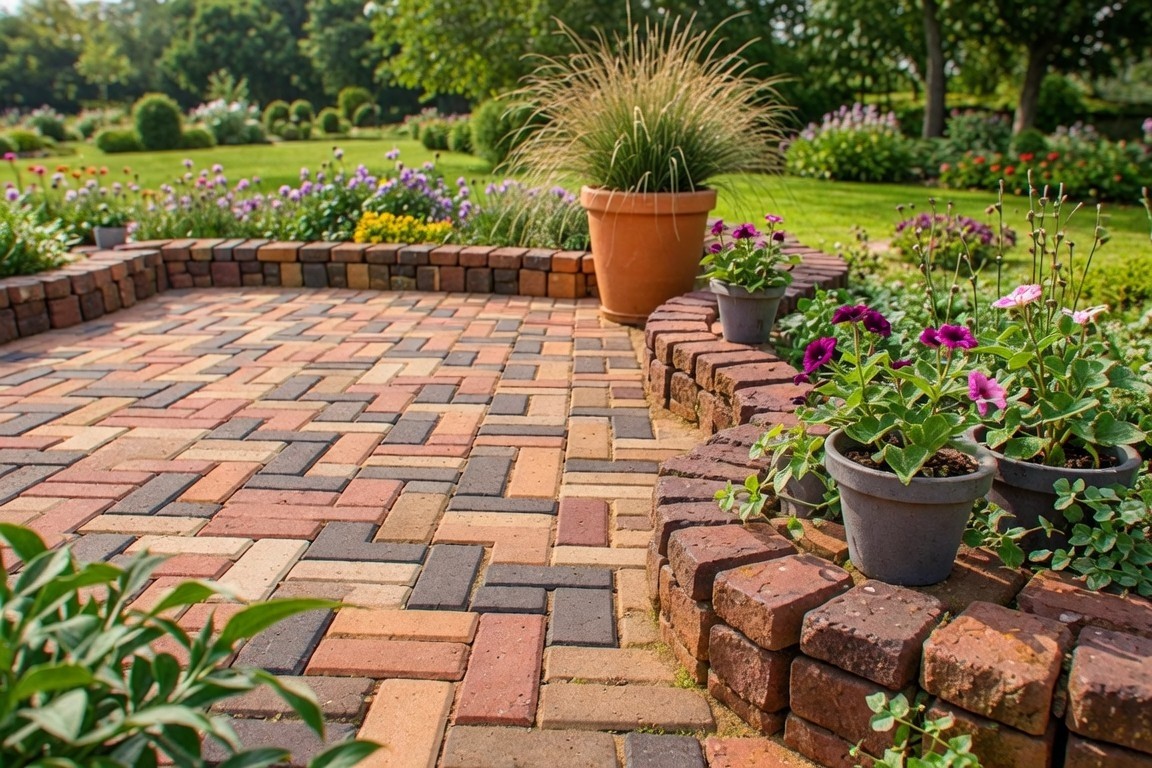
A well-built brick patio or a crisp garden border can transform an ordinary yard into a space that feels finished and inviting. Brick is one of the mo